
Marketing Basics For Small Business Owners and Influencers Should Know
Key Takeaways: Your Marketing Playbook
- Start with awareness. If your brand isn’t discovered, nothing else matters.
- Build trust and engagement. Social media isn’t just for posting—it’s for connecting.
- Create content that converts over time. SEO and evergreen assets pay dividends.
- Run focused campaigns. Track ROI diligently.
- Use data and AI—wisely. Track performance, personalize, but stay authentic.
- Grow strategically. Penetrate your existing market before expanding out.
If you’re running a business or trying to grow as an influencer, marketing can feel overwhelming. There are so many buzzwords—funnels, ROI, branding, SEO, campaigns—that it’s easy to think only the big corporations with million-dollar budgets can do it right.
The truth is, marketing is a skill you can master. It doesn’t require a degree from an Ivy League school or unlimited cash. What it does require is strategy, consistency, and the willingness to test and adapt.
At its heart, marketing is simple: it’s the art and science of connecting with people, understanding their needs, and showing them why your product, service, or personal brand matters in their lives. Whether you’re selling T-shirts, running a food truck, coaching clients online, or growing as a content creator, the fundamentals are the same.
Let’s break down these fundamentals and look at how you can apply them in the real world.
From Products to People: The Evolution of Marketing
Marketing traditionally focused on the 4 Ps—product, price, place, and promotion. But in today’s world, businesses are expanding this to the 6 Ps: product, price, place, promotion, people, and positioning.
Your product is the foundation—what are you actually offering? For a small bakery, it could be gourmet cupcakes. For an influencer, your “product” might be content—Instagram Reels, YouTube videos, or TikToks. Better said, your product is how you perceive the world, and purchase is derived from your followers in the form of views.
Price signals value. A cupcake priced at $1.00 feels like a quick snack. The same cupcake priced at $5.00 in a premium bakery signals luxury and craftsmanship.
Place refers to where you distribute your offering—a farmer’s market, Shopify store, or TikTok shop.
Promotion is how you spread the word. That could be flyers, Instagram ads, or email campaigns.
The two newer Ps—people and positioning—are even more critical today. People means recognizing that your employees, customers, vendors, and community are part of your story. Positioning is how you stand apart in a crowded market.
Case Study Example
Two coffee shops open across the street from each other. One positions itself as the late-night study spot with free Wi-Fi and jazz playlists. The other brands themselves as the “community coffee house” with open mic nights and local art. Both sell coffee, but their positioning attracts very different customers.
Building Connections: The 4 Cs of Marketing
The 4 Cs—customer, cost, convenience, communication—flip the focus to the audience.
Instead of obsessing over product features, think about the customer’s problem. Instead of just setting a price, consider the total cost (time, effort, emotional investment). Convenience today often means: “Is it mobile-friendly?” And communication isn’t just ads—it’s conversation.
Case Study Example
A fitness influencer could talk endlessly about workout science. But their audience just wants “20-minute routines for busy people.” By shifting from product-focused language to customer-focused problem-solving, the influencer becomes more valuable.
Brand Awareness: You Can’t Buy What You Don’t Know
If people don’t know you exist, they can’t buy from you. According to the Content Marketing Institute, 87% of marketers say content marketing builds brand awareness, and 80% say it educates audiences. Awareness is step one in any funnel.
Branding, though, is about being remembered. Nike isn’t just a swoosh; it’s ambition. A candle company might position itself as “relaxation in a jar,” while another might brand itself as “candles that celebrate culture.” Same product, different identity.
Case Study Example
District Clothing Company (a DMV-based brand) doesn’t just sell hoodies. It sells pride in hustle, culture, and community. That’s branding beyond fabric—it’s identity.
The Sales Funnel: Turning Attention into Action
The sales funnel guides people from discovery to purchase:
- Awareness – They first notice you.
- Interest – They start following or exploring.
- Decision – They weigh options.
- Action – They buy, sign up, or book.
Think With Google reports that 63% of shopping begins online, even if the purchase happens in-store. That means the funnel starts earlier than you think—often with a simple Google search.
Case Study Example
A food truck runs Instagram ads showcasing daily specials. That creates awareness. Stories with behind-the-scenes cooking spark interest. Testimonials build trust at the decision stage. A clickable “order ahead” link drives action.
Landing pages matter here. A focused page—“sign up now” or “order today”—beats a cluttered homepage every time. Even using a vanity URL like “bestcookiesdc.com” can increase conversions because it’s memorable.
Campaigns and ROI: Your Marketing Thermometer
Every marketing move should lead somewhere. That’s where ROI comes in—“Return on Investment.” And here are a few eye-opening data points from Demandsage.com:
- According to 2025 data, for every $1 spent on digital marketing, businesses typically earn $5 in return.
- Specifically, email marketing can deliver a staggering 3,600% ROI—that’s $36 back per $1 spent.
- Still cracking ROI on content? About 70% of businesses in one study reported positive ROI from content marketing.
Real-world Insight:
A hairstylist spends $50 on Facebook ads, promoting $20 off for new clients. Ten people redeem it, generating $500 in revenue. That’s 900% ROI—and worth repeating.
Social Media: Not Vanity—Value
Social media isn’t about vanity—it’s about value. Think with Google reports that 40% of Gen Z now use TikTok and Instagram as search engines. That means your social content doubles as discoverability.
Micro-influencers (under 100K followers) often perform better than celebrities. They’re trusted, relatable, and drive higher engagement.
Furthermore, social metrics like follower counts don’t pay bills. Engagement does. Consider these stats from synup.com:
- 78% of shoppers research businesses on social media before buying.
- 90% of small businesses use social media in their strategy.
- Customers who engage with brands online spend 35–40% more.
Case Example
A restaurant partners with five local food bloggers, each with about 15K followers. Their posts feel authentic and community-focused. The campaign delivers better results than hiring a celebrity influencer.
For influencers, the takeaway is clear: don’t chase vanity. Build real communities. A thousand engaged fans are worth more than 100,000 passive ones.
SEO and Content Marketing: The Sustainable Growth Engine
SEO and content marketing are about sustainability. Content Marketing Institute reports that 71% of B2B marketers say content marketing has become more important in the last year. Why? Because once your blog ranks, it keeps working for you.
Case Example
A real estate agent blogs weekly, answering questions like “What’s the average down payment for first-time buyers?” Over months, these blogs rank. Each new lead that discovers them through Google is organic growth that costs nothing extra.
Digital Ads: Playing the Short Game
SEO takes time. Ads bring immediate visibility. Google’s own research shows that online ads increase brand awareness by 80% and that 76% of people who search on their smartphone visit a business within 24 hours.
Case Study Example
An e-commerce fashion brand runs a $200 TikTok ad campaign targeting women 18–24 who like sustainable fashion. It drives 3,000 views, 300 clicks, and 30 sales. The campaign pays for itself while boosting long-term customer acquisition.
Segmentation, Positioning, and SWOT: Speak to the Right Crowd
Not everyone is your audience—and that’s okay. By segmenting your market (e.g., young parents, urban professionals, local shoppers) and positioning your brand (e.g., “convenient & affordable,” “luxury & sustainable”), you can tailor your messaging to resonate.
Use a SWOT analysis to guide decisions:
- Strengths: What are you great at?
- Weaknesses: Where do you fall short?
- Opportunities: What external factors could help your business grow?
- Threats: What external challenges could undermine you?
Case Example
A small photography studio identifies its strengths (portrait quality, personal touch), weaknesses (new technology), opportunities (a new dog park continues to attract new visitors), and threats (DIY smartphone trends). They reposition accordingly and become the go-to pet photographer in town.
Take Your Marketing Further
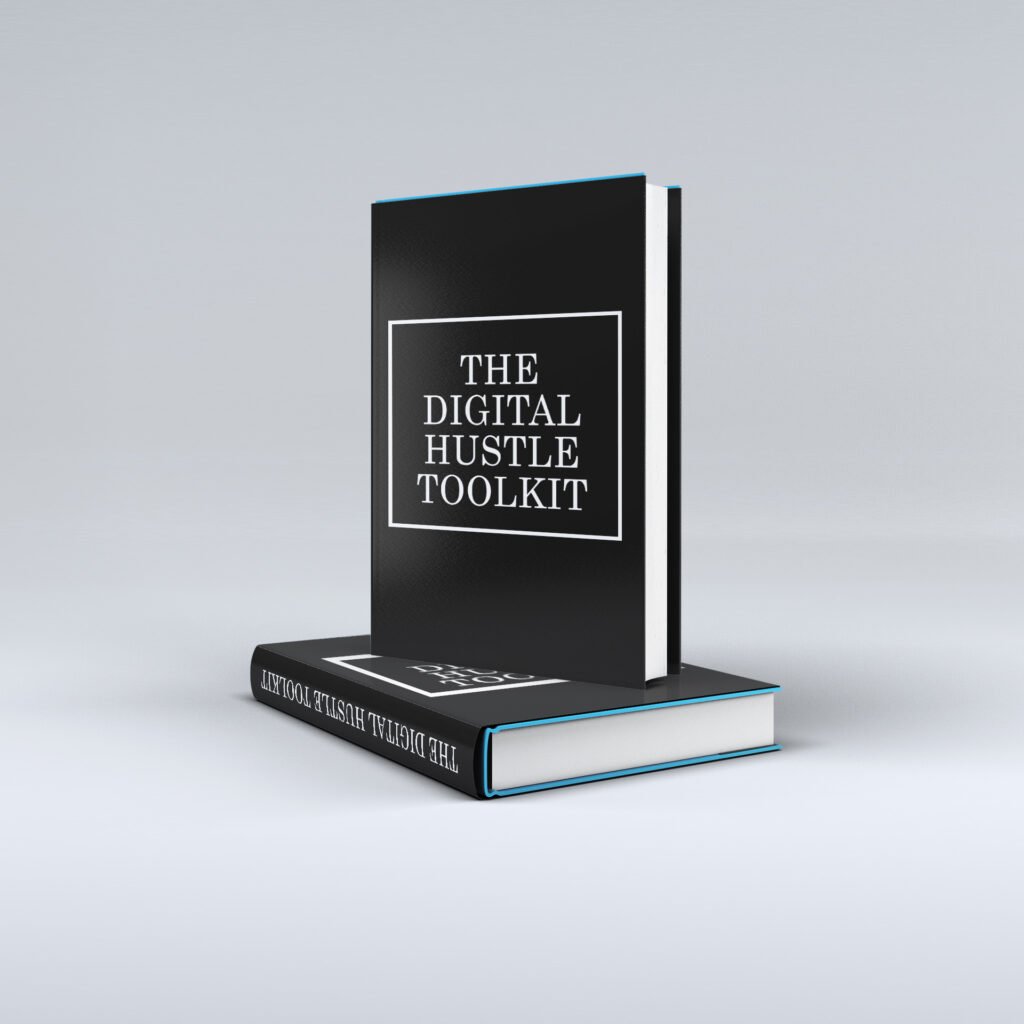
Learning the marketing basics for small business owners and influencers is just the start—execution is where the growth happens. To make things easier, I’ve put together the Digital Hustle Toolkit: a collection of marketing hacks, apps, and productivity tools designed for small business owners and influencers who want to build real momentum.
Inside the toolkit, you’ll discover:
✅ Proven marketing strategies to grow your brand online
✅ Content creation hacks that save time & increase engagement
✅ Productivity systems to maximize your day
✅ Must-have apps & platforms to make your hustle more efficient
👉 Download the Digital Hustle Toolkit today and turn these marketing basics into action steps that drive results.
Final Words
Small business success stories are all around us—and most begin with clarity, consistency, and creativity in marketing. With most businesses achieving solid ROI from content marketing and digital ads becoming central to competition, there’s never been a better time to be strategic—even on a small budget.